Florida FF 2026 shorts reviews
Exclusive to MeierMovies, April 2026
Here you will find reviews of short films of the 35th annual Florida Film Festival. For more information on the films and to purchase tickets, visit FloridaFilmFestival.com. (Images are courtesy of the Florida Film Festival.)
Midnight shorts
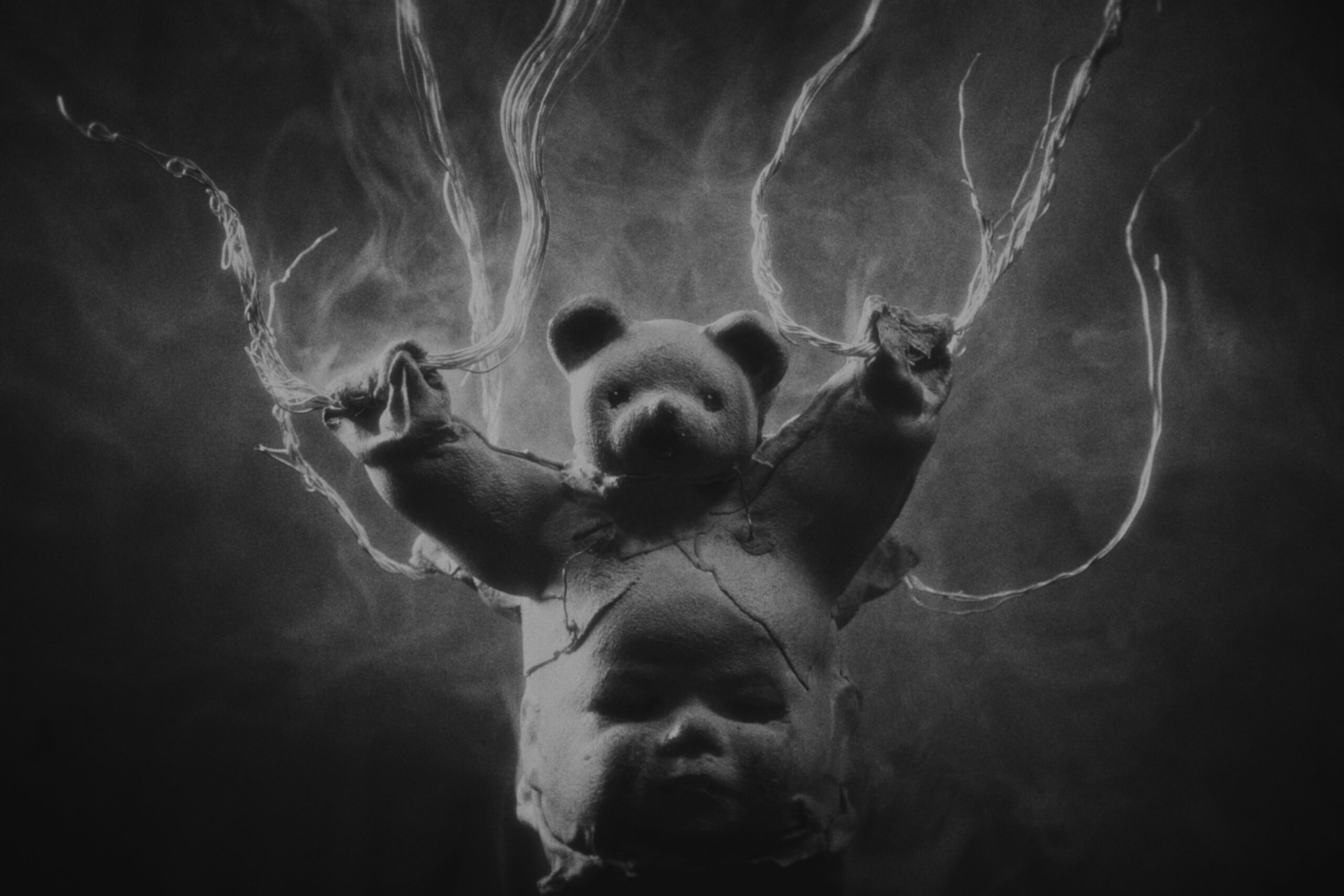
Merrimundi
The 2026 midnight shorts are among the best ever. I’m even tempted to use a word rarely associated with this block: highbrow. But it seems fitting, as two of the seven – yes, only seven this year – played the granddaddy of film festivals: Venice.
The program is bookended by two 4-star offerings: Niles Atallah’s Merrimundi and Eric Jackowitz’s The Seeing Eye Dog Who Saw Too Much. The former is a mostly animated blend of horror and surrealism but also lurches from kitsch to a sort of sing-along from hell. (Hieronymus Bosch, what hath thou wrought?) The latter, the tonal opposite of Merrimundi, is a parody of Italian giallo, right down to the ridiculous story and cartoonish violence. It might be the funniest film of the entire fest. Let that (bad) sync in.
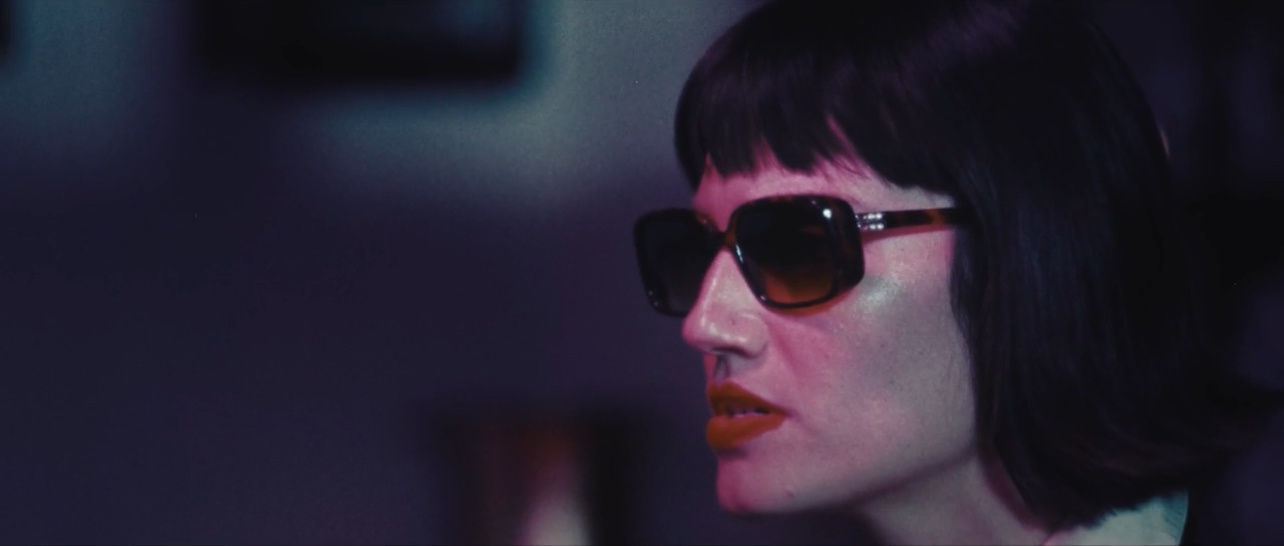
The Seeing Eye Dog Who Saw Too Much
But for those of you who prefer your midnights trashy, never fear. There’s still goofiness, gore and pointless sexuality. Thanks to Kate Thulin’s American Cheese, you might never think of the word “crowning” the same way again. And just when you thought it was safe to go back to sucking a giant teat, along comes Alexandra Hayden’s Wall Udder. (At least the breast contains no Ultra Juice. You’ll have to watch Carl Conway Maguire’s vape comedy for that.)
If you believe put-it-together-yourself furniture is one of Satan’s gifts to humanity, you might enjoy Chris McInroy’s CHÄIR, while Joe Hsieh’s Praying Mantis will scratch the itch of those of you into animated decapitation, insect-style.
I can give my full-hearted endorsement to only the first two films I mentioned. But I still applaud the creative insanity of all the filmmakers, even the ones whose films left me flummoxed and a smidge disgusted. May you continue to nurse at the nipple of imagination.
At the time of the publication of this review, the block had already played Enzian on April 11, but you can catch it again at Regal Winter Park Village (Theater A) on April 17 at 11 p.m. The program is nicknamed “Crazy Train,” in honor of the recently deceased Ozzy Osbourne.
Shorts #1 and #2
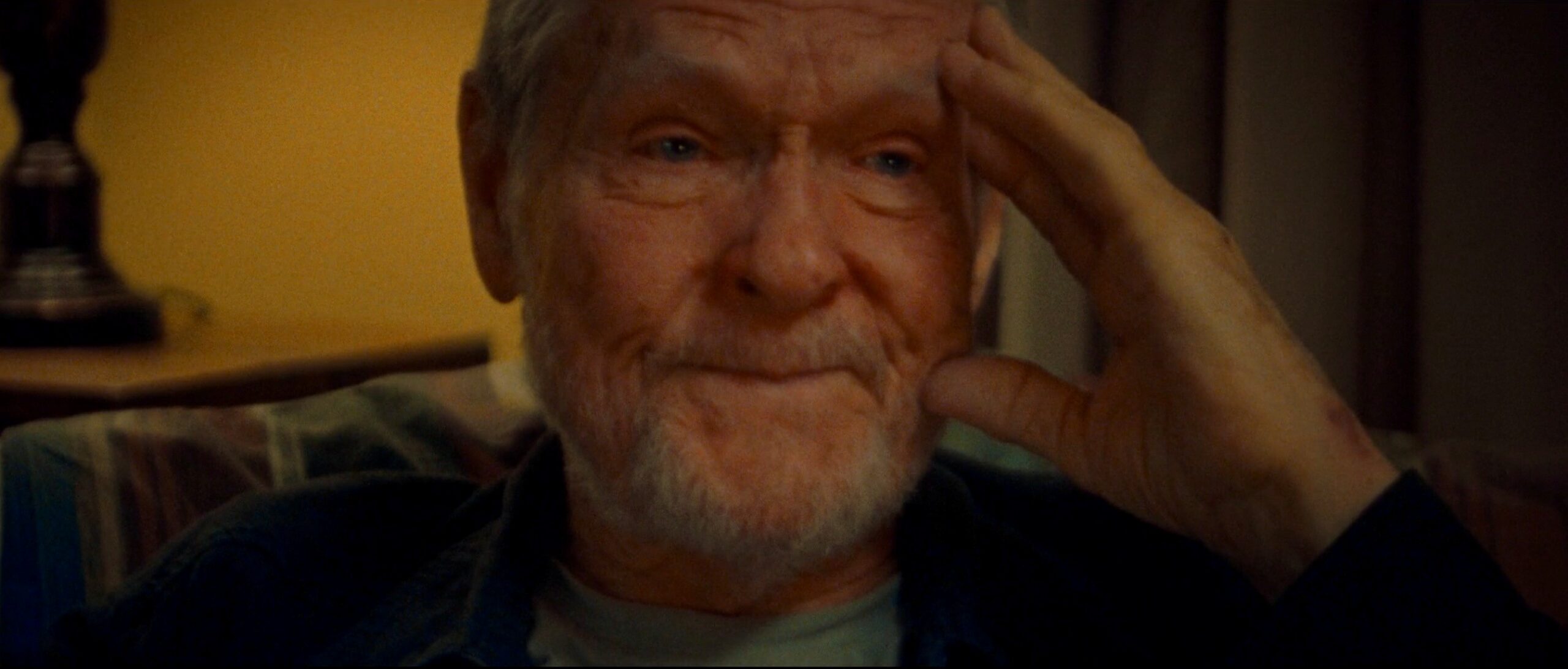
William Sadler stars in The Last Day of Bryon Bray.
Shorts program #1 is named “Many Rivers to Cross,” after the song by Jamaican musical icon Jimmy Cliff, who died last year. The title is apropos, as most of the characters in the seven films have their own metaphorical streams to swim. But only the block’s final movie, The Last Day of Byron Bray (4 stars), mixes the right blend of story, performance, pacing and directorial sensibility. For various reasons, the others don’t quite congeal.
Byron Bray, directed by Michael Borrelli and starring William Sadler (The Shawshank Redemption), is a haunting, subtle examination of personal legacy, sexuality and, ultimately, death, shot on 16mm film. And despite its overreliance on music, especially toward the end, the film never seems 20 minutes long. Its time flies, gone too soon, as is the title character, who is based on the eponymous real person.
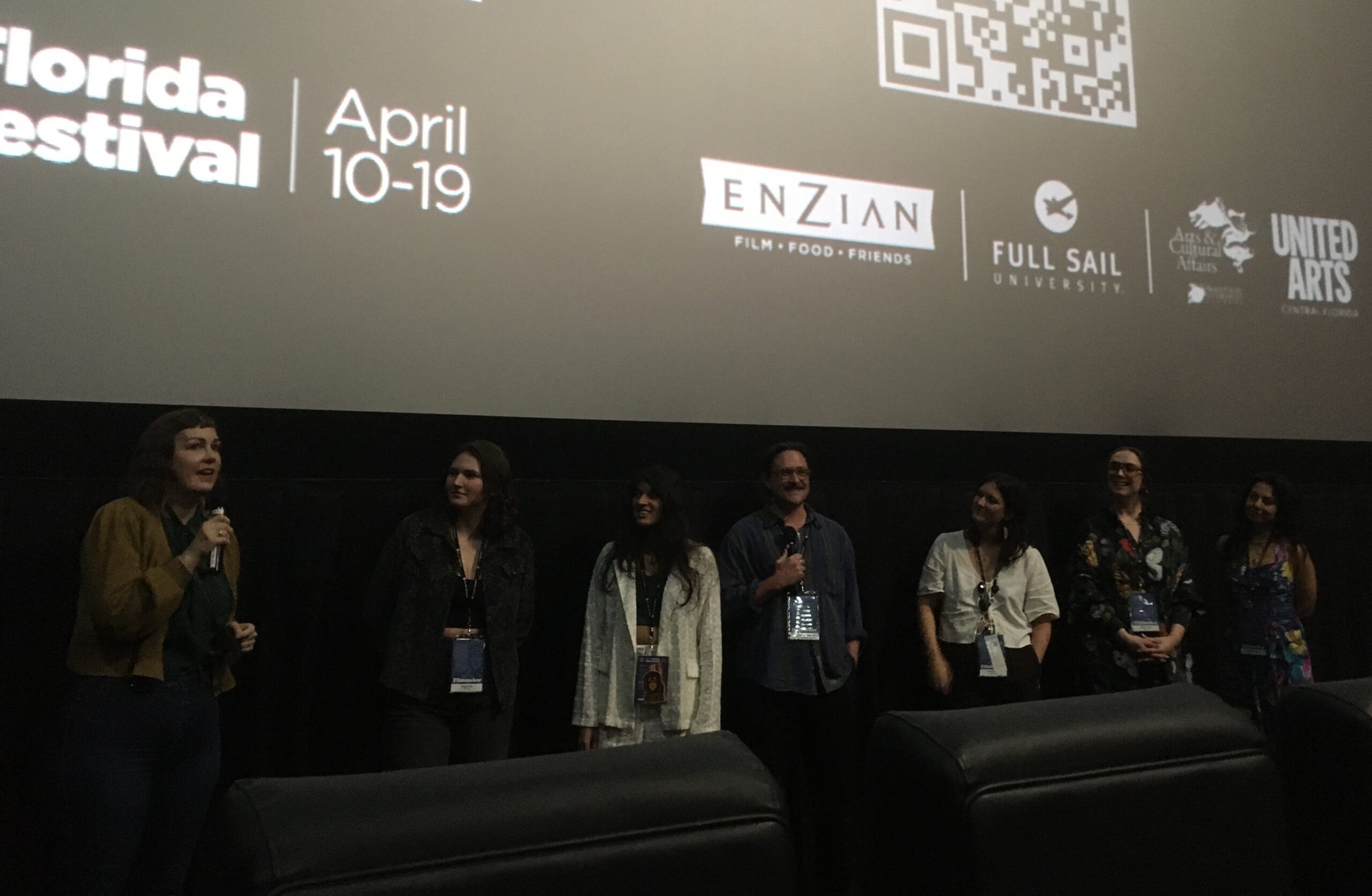
Filmmakers from the Shorts #2 block participate in Q&A session with festival programmer Kat Whitacre, left, at Regal Winter Park Village on April 11.
Every shorts block will find its audience, so it’s difficult to say definitely not to watch a program. But if your time is limited, skip #1 for #2. Named “The Other One,” for the composition by the Grateful Dead’s Bob Weir, who also died in 2025, this block sticks with you emotionally and aesthetically far more than block #1.
The group’s connection to the Weir song is tenuous, but most of the characters from the seven films do seem like outsiders, forgotten or perhaps alienated from their surroundings and friends.
“The bus came by and I got on,” Weir’s song goes. “That’s when it all began.”
There are no buses in block #2, but almost everyone is on a journey of some sort. Take the title character in Timothy Jacob Elledge’s Neuman (3 stars), a recovering alcoholic struggling to face the one-year anniversary of his sobriety. Or the daughter in Kathreen Khavari’s part-Farsi-language dramedy Tub (3 stars), who is dealing with an abusive mother and a precariously placed, leaking bathtub. (Remember the hotel scene in Marty Supreme?) Or the high school students in Sterling Hampton IV’s Study Hall (3 stars), a refreshingly subtle look at Black identity through the prism of politics. They are all “others” in some sense.
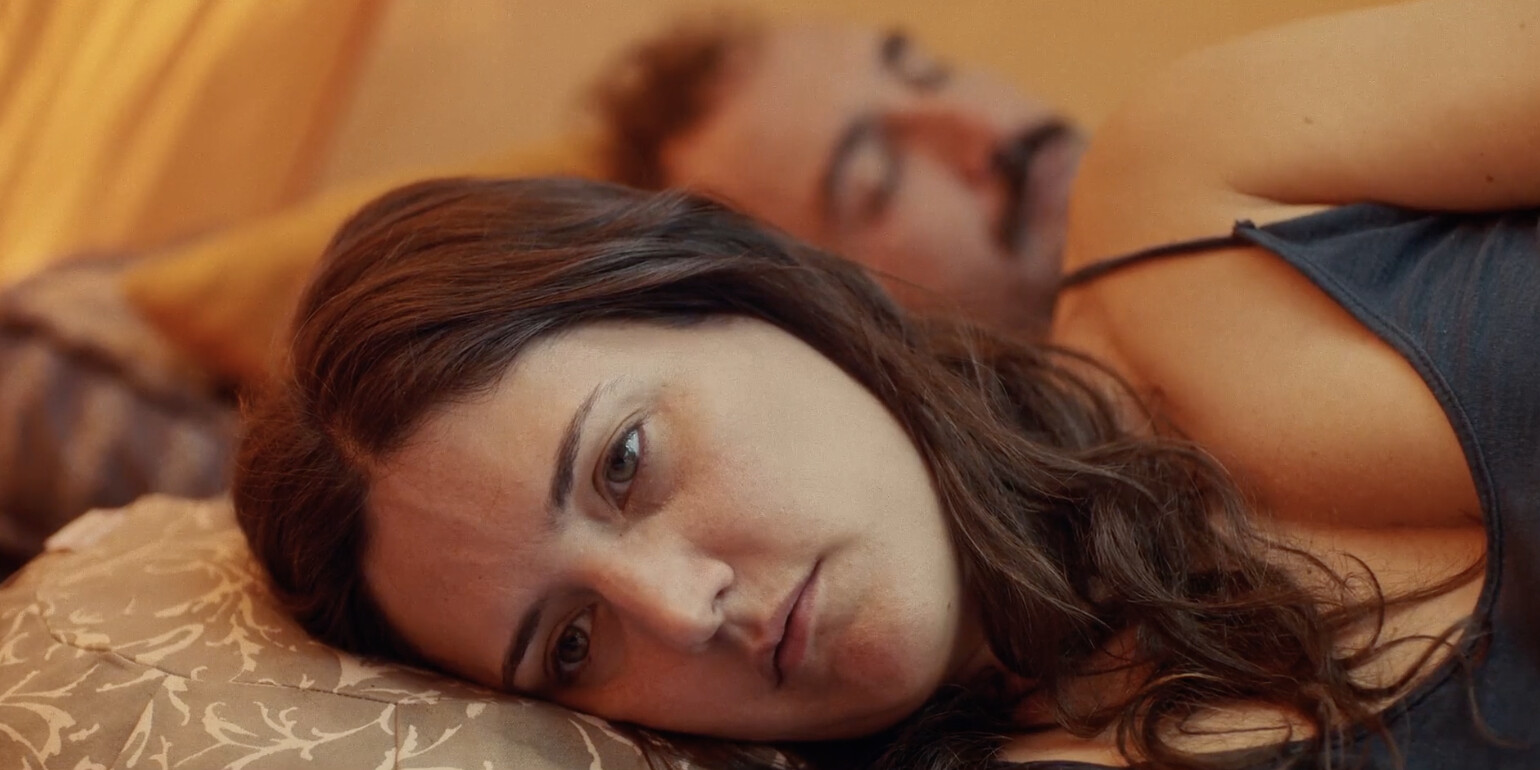
Lydian Blossom stars in Nut Milk in May, inspired by Mike Leigh’s Nuts in May, from the BBC Play for Today series.
But the two best films are comedies. That, of course, doesn’t mean they don’t sometimes offer insightful social commentaries, but they do so with laughs to boot. Nut Milk in May (3 stars), directed by Brooke Trantor and written by and starring Lydian Blossom, could have easily turned into just another disposable farce. But a clever script, sagacious satire (it’s nice to see the Left laugh at itself) and Blossom’s spot-on performance make it memorable. (Clayton Farris and Alex Herrald lend fine support.)
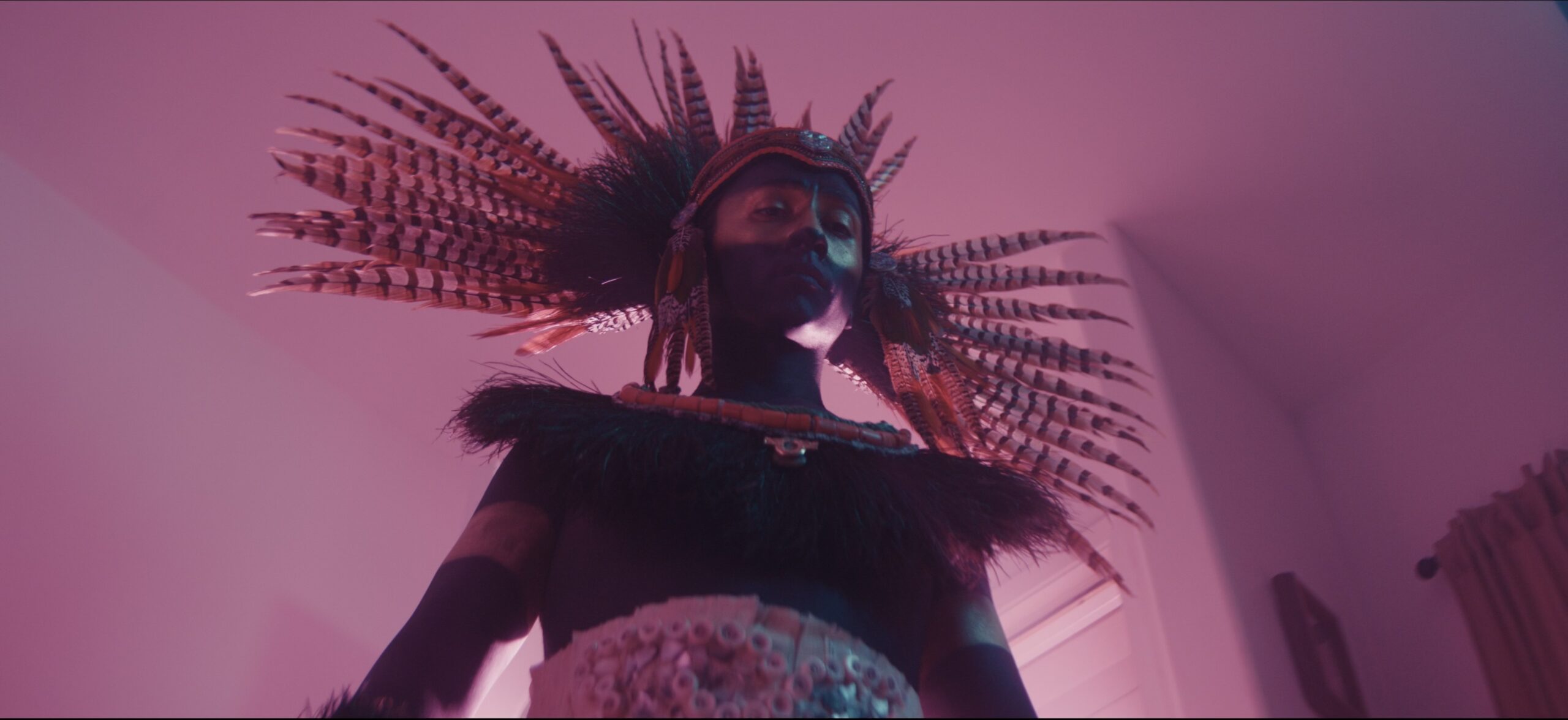
Xolo
However, the block belongs to director Matthew Serrano’s Xolo (4 stars), a hilarious, imaginative, touching take on death from the perspective of a dog and an ancient Aztec god. Yes, you read that right. Sacrifice time to see this film.
Shorts #3
This block, which hovers between programs #1 and #2 in quality, is named “Can’t Get Enough,” as a tribute to Mick Ralphs of Bad Company, who died in June. But as my friend, fellow film critic Lisa Blanck, told me after the screening on April 16, a better name might have been “men (of all ages) behaving badly.”
From crazy scout masters (Scout’s Honor) to racist gas-station owners (Somewhere to Be), to suicidal men (Dear Shop Girl and All the Real Boys), to gropers of girls (Squall Mouth), to bullies (Iron Lake), the men and boys in these films are poor representatives of their gender.
You might think me another bad example of the male species, but I must say that not all these films succeed at their storytelling. However, even the ones that don’t leave an impression.
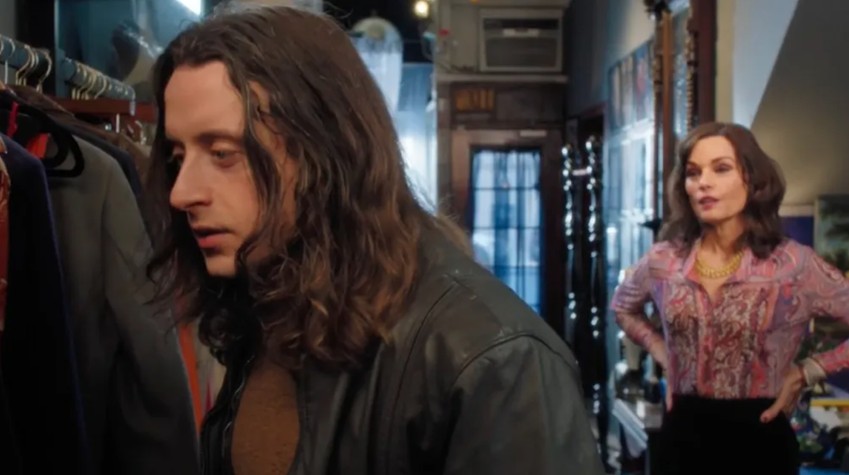
Dear Shop Girl
Dear Shop Girl (4 stars) has star power and uses it cleverly, which makes it the clear winner of the block. With a great performance by Rory Culkin, a solid turn by Lorraine Harris and even a voiceover by Fred Armisen, writer-director Nira Burstein’s dramedy is as eye-catching as the shop girl’s vintage clothes.
Grant Swanson’s Iron Lake (3 stars) and Ohad Ira Amram’s All the Real Boys (3 stars) are both successful at turning deceptively familiar subjects on their heads while simultaneously making social statements. But it’s Caro Ribeiro’s comedy Cake (3 stars) that breaks the “bad boy” mold of this block and delivers the funniest surprises by reminding us that women can be bad too. OK, maybe not bad. Just weird. OK, maybe not weird. Just vulnerable. OK, damn it, maybe men are the bad guys in this one too. I give up.
Non-block shorts
If your belly isn’t full of nuts from Trantor and Blossom’s film, gorge on The Chimney Sweeper (3 stars), about a fourth-generation crafter of nutcrackers. What could have been an inconsequential 9-minute profile about a person you’d never heard of and weren’t particularly interested in turns into a head-turner thanks to director Jack Raese’s stylistic camera, editing and music choices.

Panther Pat
This is one of several shorts that, instead of being featured in a block of brief films, is presented prior to a feature. (It plays before Santacon and, frankly, it’s better than the long-player.)
If You Really Love Me, Outlive Me (3 stars), which plays before If These Walls Could Rock, is another example of a profile that could have been easily forgotten if not for the fashionable sensibilities of the directors – in this case, Alejandro Ruax and Saskia d’Altena. Oh, and the music is hypnotically rockabilly too, courtesy of the doc’s subjects, Austin legends Dale and Celine Watson.
The Man Who Takes Pictures of Flowers (4 stars) focuses on a Korean photographer who, for 45 years, has been taking nature photos. Under Yoo Lee’s direction, the short doc, which plays alongside School for Defectors, really blossoms, particularly because of its beautiful stop-motion animation.
But perhaps the best non-block short of the fest is Panther Pat (4 stars), which plays with A Life Illuminated. I might sound like Dale Watson’s broken record, but this is yet another example of a profile turned on its head by style. Specifically, director Ashley Brandon chooses stop-motion doll animation to bring to life the story of the first woman (Patricia Palinkas) to play professional American football – right here in Orlando!
5X Real

The Baddest Speechwriter of All
If you’re seeking five good films for the price of one, look no further. The short-doc block is always one of the best programs at the Florida Film Festival, and this year is no exception. Though the block feels less weighty this time – with an emphasis on light-hearted fare – it ends impactfully with my pick for best short doc of the entire festival: The Baddest Speechwriter of All (5 stars). If judges select it as the winner, it will become Oscar-eligible. But even if it doesn’t, look for it to win another Oscar-qualifying fest and receive an Academy Award nomination.
Ben Proudfoot and Stephen Curry (yes, that Stephen Curry) direct this story of Clarence Jones, whose relationship with Martin Luther King Jr. changed history. This partially animated documentary is particularly revelatory thanks to its interview with the 92-year-old Jones and its analysis of the cooperative relationship between the Black and Jewish communities in the United States during the 1960s Civil Rights Movement.

Some of the filmmakers and subjects of the 5X Real program answer audience questions following the screening on April 17. (photo by Cameron Meier)
The other four docs don’t rise to the same level, but I recommend them all. And because I’m writing this after the final screening of the block, I strongly encourage you to hunt down all these short gems, including director Winslow Crane-Murdoch’s Oh Whale (4 stars), Danny Schmidt photography-themed The Book of George (3 stars), Emily Schuman’s The Baker’s Hotline (3 stars) – about baked goods and phone-focused companionship – and Dan Perlman’s Being Bublé (3 stars). The latter, about a Michael Bublé impersonator who doesn’t look like him and can’t sing, might be the oddest of them all, and that’s saying something when it’s being shown alongside a doc about an exploding cetacean.
Animated Shorts
 There are no mallards in the domestic Animated Shorts program, but, collectively, the block is one big, weird, challenging and just plain odd duck.
If you don’t like it, blame the sensibility of the selection-committee members, who seem to prefer an animated collection closer to the experimental Sunspots and the transgressive Midnight blocks. But also blame society, as these are the types of films being made and accepted into festivals around the world. If you love the block, however, you will want to thank the aforementioned programmers, not to mention our aesthetic world.
This reviewer is in the middle, as usual. And based on my conversations with fellow festival-goers, it seems, like Stealers Wheel, I’m stuck in the middle with you. Indeed, many attendees expressed their admiration for the filmmakers’ talents while voicing their disappointment that not a single one of the 11 films represented traditional, narrative, animated storytelling. A couple came close. But almost all veered close to those aforementioned Sunspots and Midnights.
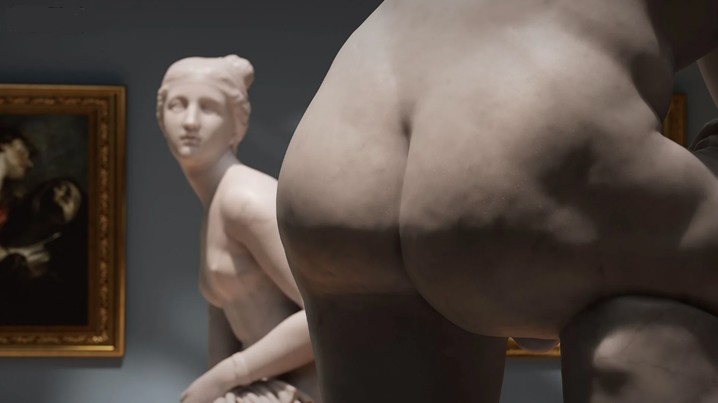
Yearn
The film that quacked the loudest for me was director Ben Smith’s Yearn (4 stars), a stunning CG story of two museum statues who long for each other, quietly, presumably for eternity – until tragedy throws them together, leaving their romance in pieces.
Paper Trail (3 stars), which opens the block, leaves its emotional mark too, by reducing an entire human life to the drawings, scrawlings and legal paperwork he has left behind. What do our lives amount to? This scribbler doesn’t know, but I’m closer to finding the answer after seeing Don Hertzfeldt’s film.
Kate Renshaw-Lewis’s Busy Bodies (3 stars) won’t make you feel any less depressed about existence. It might even add to your existential dread, in a tiny, Kafkaesque manner. But its monotony is entrancing.
Closing the block, stop-motion style, is The Mushroom (3 stars), another film in Shengwei Zhou’s series Perfect Motion. As with most experimental films, you might not understand it, but if you jibe with its vibe, this champignon can prove aesthetically tasty. Make room for the shroom.
International Animated Shorts
Proving that the experimental and transgressive trend is not limited to the United States, the International Animated Shorts block includes mind-bending and mentally troublesome – “good trouble” mostly, as John Lewis would say – films from around the globe. But, in contrast to the domestic animated block, this program contains a fair amount of traditional storytelling. It also includes one masterpiece and a couple that are close.

Trading Cards
Trading Cards (5 stars), from Australian director Radheya Jang, is a beautifully but fairly simply drawn examination of existential dread and the horrors of adult depression and anxiety. If this sounds dour, rest assured it is not, as the fantastical tale involves a time-travel meeting between a man and his younger self. Dark, whimsical and impactful – with a stellar script and voiceover – it’s one of the fest’s best films. I wouldn’t trade it for any other animated short at this year’s FFF.
In his introduction to the screening on April 19 at Enzian, festival programmer Georg Koszulinski called the block “exceptional,” and I certainly can’t argue with that adjective when it comes to this film.
Estonian director Natalia Mirzoyan’s Winter in March (4 stars), about a Russian couple’s hatred for the war in Ukraine and their subsequent efforts to flee the country, is the weightiest of the block’s nine films. Don’t be surprised if you see it come Oscar time. But the much simpler, shorter Sorrow Doesn’t Sleep at Night (4 stars), from Chilean directors Josefina Montino and Martín Andre, is almost as good. You will be haunted by this fabric stop-motion gem, just as the film’s subjects, a hermit and his cat, are haunted by the ghosts of their past.
The grim Mother’s Child (Naomi Noir), the surreal Um (Nieto) and the apocalyptic Ashen Sun (Camille Monnier) are all worthy of 3 stars and therefore deserve recognition too.
International Shorts #2
Having reluctantly missed the International Shorts #1 block, I went in with enthusiasm to block #2. I left feeling sick.
That’s not because of the quality of the six films, which was impressive. It was because of the brutality of the closing movie. But more on that later.
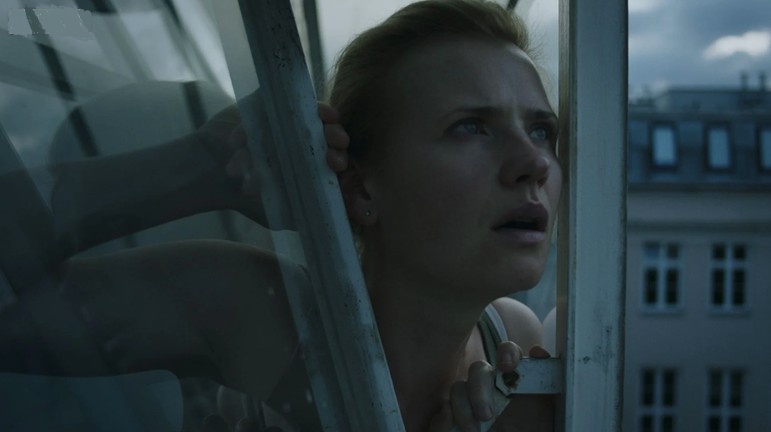
Wiktoria Gorodeckaja stars in I Gaze at the Sky.
The block’s opener, I Gaze at the Sky (5 stars), is also its best, and the festival audience agreed, voting it their favorite international short. A dystopian yet disturbingly realistic look at Vladimir Putin’s campaign of educational indoctrination in the wake of Russia’s war with Ukraine, director Alexandra Strunin’s film could see an Academy Award nomination. (I’m reminded of the Oscar-winning documentary Mr Nobody Against Putin.)
The Spectacle (4 stars), a fantastical drama from Hungarian director Bálint Kenyeres, and It Means Hope (4 stars), a gritty demonstration of Iran’s human-rights violations from Iranian director Shadi Karamroudi, are difficult to forget. Both are slow-paced, with muted performances, but their aesthetic choices speak volumes.
Candy Bar (3 stars), an Australian film from Nash Edgerton, is a welcome comedic interlude among the otherwise dark program. But the poetic Swim Sistas (2 stars), a British documentary about Black female swimmers, is out of place.
The block ends with German director Simon Schneckenburger’s Skin on Skin (3 stars), about two closeted gay/bisexual men laboring at a pig slaughterhouse. Robbed of their humanity, they struggle to survive each day while doing unspeakable things to animals. With graphic depictions of pig corpses, the film is difficult to take, and even harder to interpret.
I’m not sure why Schneckenburger chose the setting. If he wanted a metaphor for human suffering and degradation, he succeeded in just the right amount. If he wanted shock value, he succeeded too well. I don’t believe in trigger warnings, but this film probably needs one, especially for those who love animals. It’s easily the most disturbing film of the festival.
Even more disturbing was the audience’s reaction at the Enzian screening on April 19. They seemed to be disturbed, but more by the human side of the story, and not unduly. I saw no walkouts. And many kept eating their meat. (Enzian is a dine-in cinema.) And in post-movie discussions, I heard no one mention the pigs’ agony.
“If slaughterhouses had glass walls, everyone would be vegetarian,” Paul McCartney is fond of saying. I doubt it.
For ratings of all the short films I saw at the 2026 Florida Film Festival, plus ratings of nearly 4,000 shorts dating back to 1888, visit my short-film lists.
© 2026 MeierMovies, LLC