The Odyssey
The Odyssey, 2026, 4 ½ stars
Epic cinematic poetry
Visual triumphs outweigh misplaced modernity
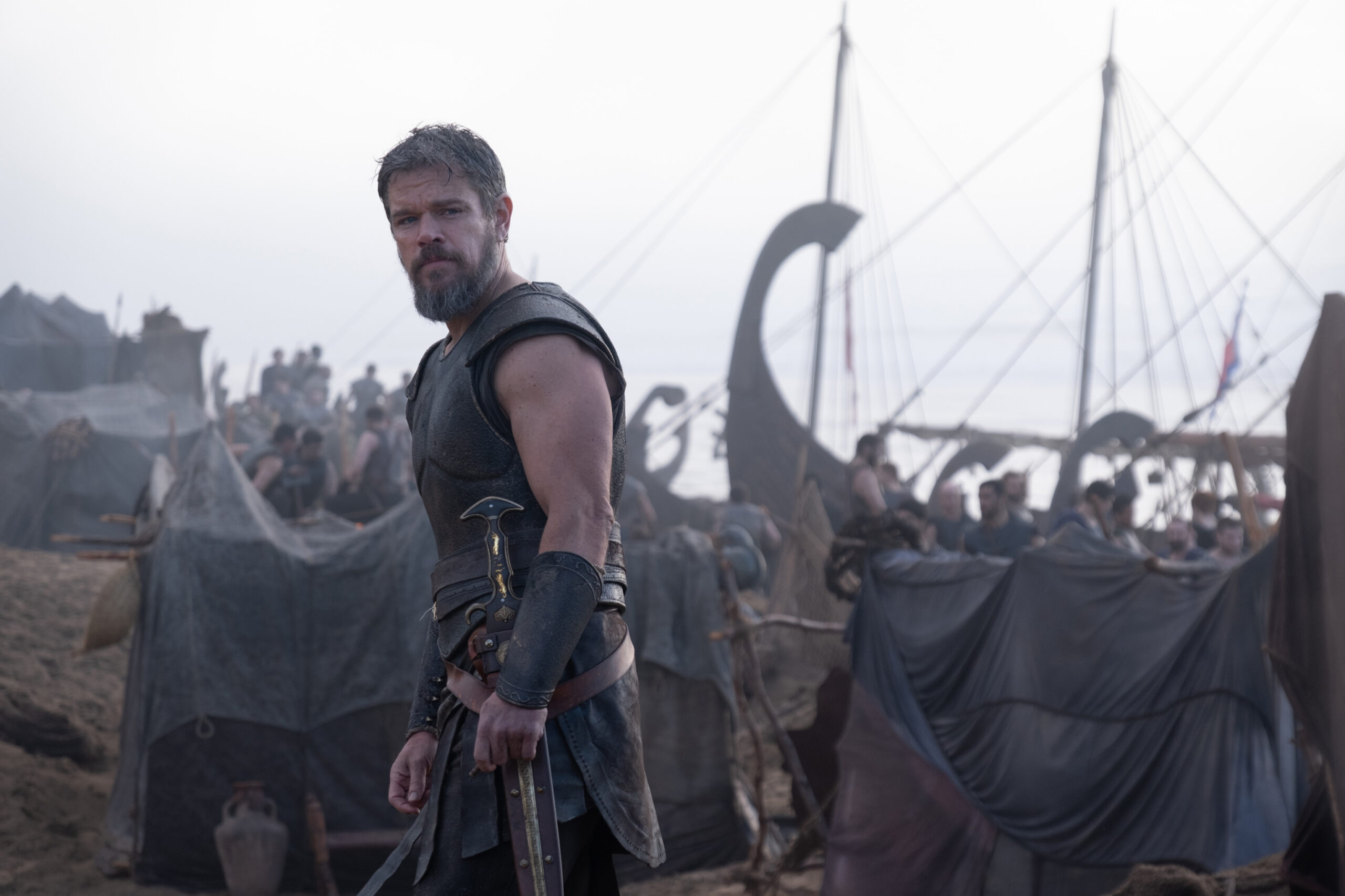
Matt Damon stars in The Odyssey. (All images are copyright and courtesy of Universal Pictures / Syncopy.)
Exclusive to MeierMovies, July 19, 2026
One of the greatest moments of Homer’s Odyssey is the hero’s communion with the spirits of his dead soldiers. If souls really do live on, perhaps Homer himself has just seen writer-director Christopher Nolan’s interpretation of his epic poem. And if he has, he is likely astonished (mostly good, some bad), thankful someone has finally brought a great version to the screen. He only had to wait 2,700 years.
Normally a critic worries about spoilers, but you’ve had almost three millennia to catch up, so here goes. Following the events of Homer’s Iliad (named for “Ilion,” or Troy), which concerns the end of the Trojan War, Odysseus, the king of Ithaca, is headed home. But multiple obstacles stand in his way: trials that have become legend. In fact, they were legend prior to Homer writing them down. (Homer himself might be part legend, and the authorship of the epic poems is not conclusive.)
Odysseus and/or his men outwit the Cyclops, are turned into pigs (and back again) by the sorcerer Circe, are ravaged by the giant Laestrygonians, barely escape the sea monster Scylla and safely pass the Sirens and their tempting but deadly song by plugging their ears with wax. But Poseidon and the sea he rules prove more difficult, as does the nymph Calypso, who cares for Odysseus so seductively that our hero can’t bring himself to leave for years. It’s only when he recovers his wits and memory that he can complete his journey home.
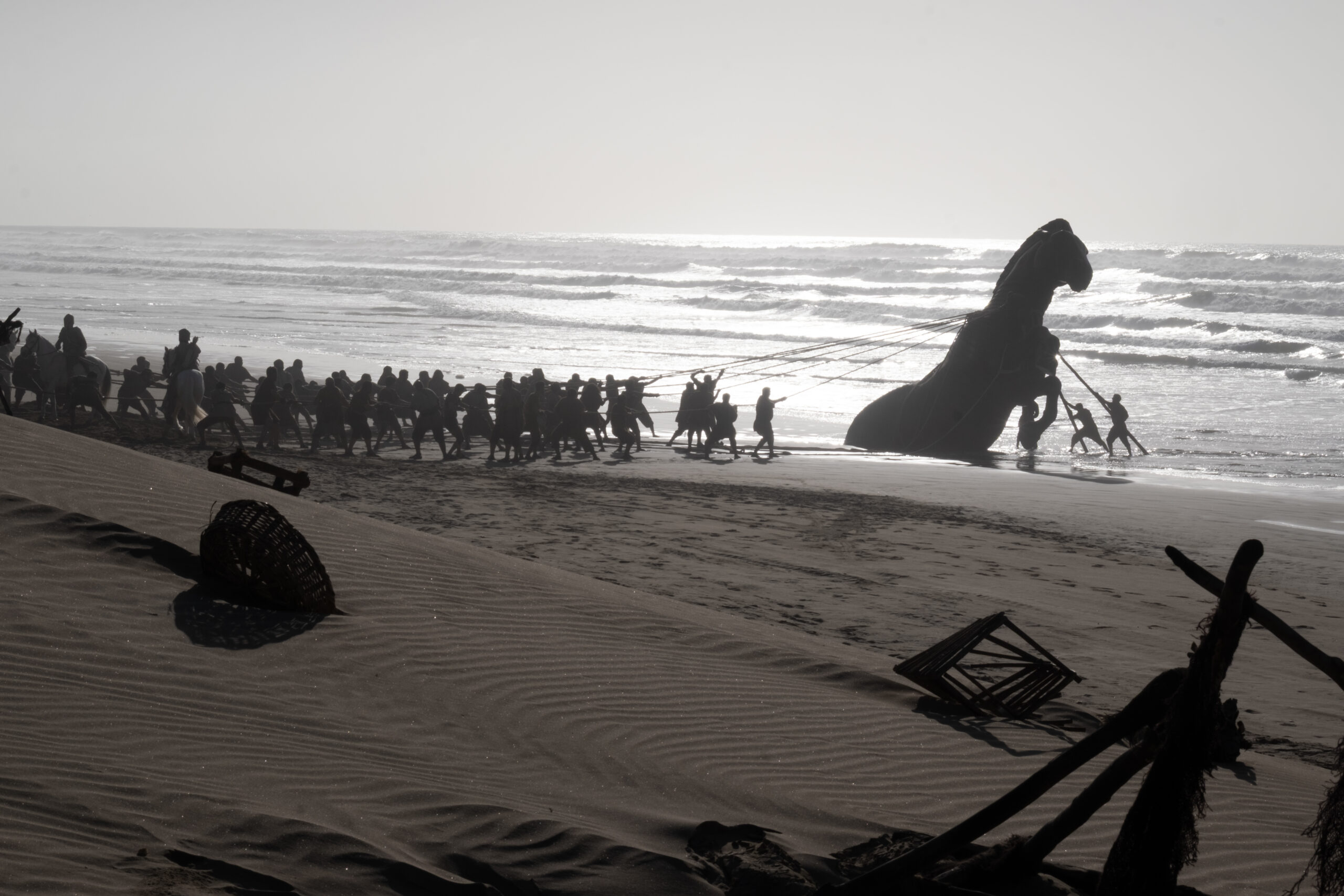
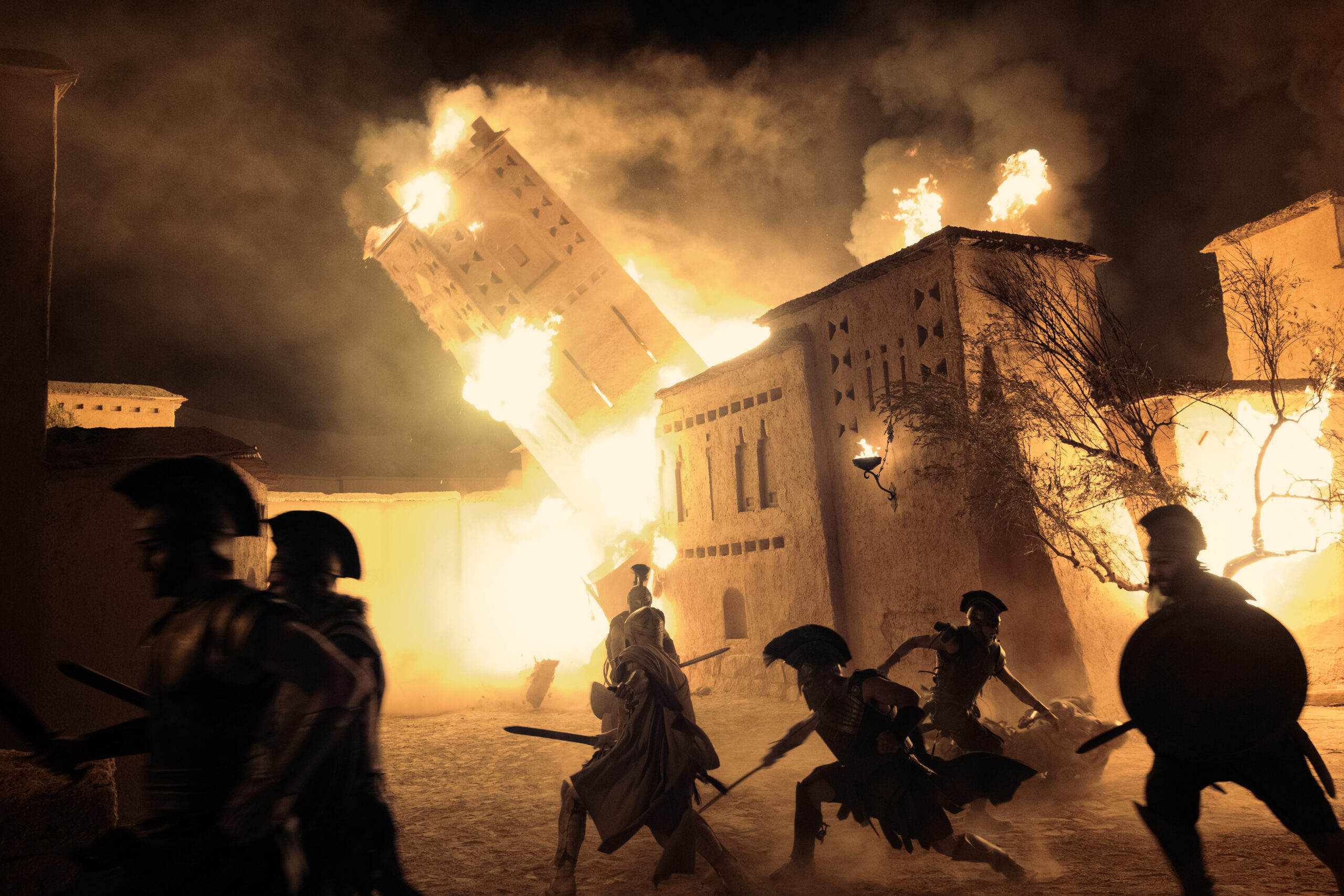 Most of the story is told in flashback while Odysseus is with Calypso. Included in the flashbacks is the ultimate battle in which the Greeks trick their enemies by hiding inside a “gift”: the famous Trojan Horse, thereby gaining access to the walled city and ravaging its people – all while breaking Zeus’s moral code, a crime that will haunt Odysseus and his entire world. (Homer’s Odyssey only briefly mentions the horse, and it’s not in The Iliad at all. The most detailed account of the horse actually appears in The Aeneid, by Virgil, around 20 BCE.)
Interestingly, Nolan chooses to not show the gods. This choice grounds the film in realism, despite the fantastical, magical elements. The one exception is Athena, with whom Odysseus converses several times. But when we finally learn what form Athena has taken, it’s heartbreaking – and becomes the film’s strongest anti-war plea.
To create his visual extravaganza, Nolan employs arguably the best editing, cinematography, sound and special effects of the year. The latter are particularly impressive because we’ve come to expect CGI for these types of wonders over the last three decades. Instead, Nolan opts for practical, going so far as to build a giant animatronic puppet of the Cyclops and film it in a cave in Greece, with a real herd of sheep. Even the transformation of men into sheep is traditional, sans computers. Expect Oscar nominations for all the aforementioned categories but especially visual effects.
 It doesn’t deserve one for casting, however, as that is where the movie stumbles. Embracing a modern approach, Nolan eschews traditional Greek epic storytelling and features actors of all ethnicities, all with modern American accents. Acting is acting, and performers should play whatever character they want. But one hopes for some common sense and respect for the source material, not to mention Greek history and culture. So when the film begins with a bard (African-American Travis Scott) “rapping” the story of the Trojan War, count me out.
Nolan apparently cast Scott to compare Greek oral tradition with today’s rap. But wouldn’t a nod to ancient Greece have been more suitable? Indeed, I would have advised Nolan to cast a Greek actor (are there any in this entire film?) speaking a few lines in Ancient Greek, subtitled, then gently transitioning to English for the rest of the picture. That decision would have immediately transported us back to 1200 BCE, when the story is set. Admittedly, we don’t know exactly what Ancient Greek sounded like then, but we can take an educated guess – and the result would have been fascinating. (It would have made more palatable the use of modern language, including the script’s liberal uses of the casual “dad” and “OK,” plus apparent inaccuracies in costume. Nolan seems to have occasionally forgotten that a story like this must be relatable but also eternal.)
Even more ridiculous is the casting of Helen of Troy. Though Lupita Nyong’o is a fine actor and strikingly beautiful, the character has traditionally been depicted as fair-skinned, so fair as to contrast heavily with her fellow, more olive-toned citizens. Homer called her “white-armed,” though it’s unclear whether he was referring to paleness of skin or social status. Of course, Helen was mythical, the daughter of Zeus, so perhaps this entire conversation is crazy. But imagine if a traditionally Black character, described as the most beautiful woman in the world, were played by a White actor. The cries of bigotry would be almost as deafening as the Sirens’ song.
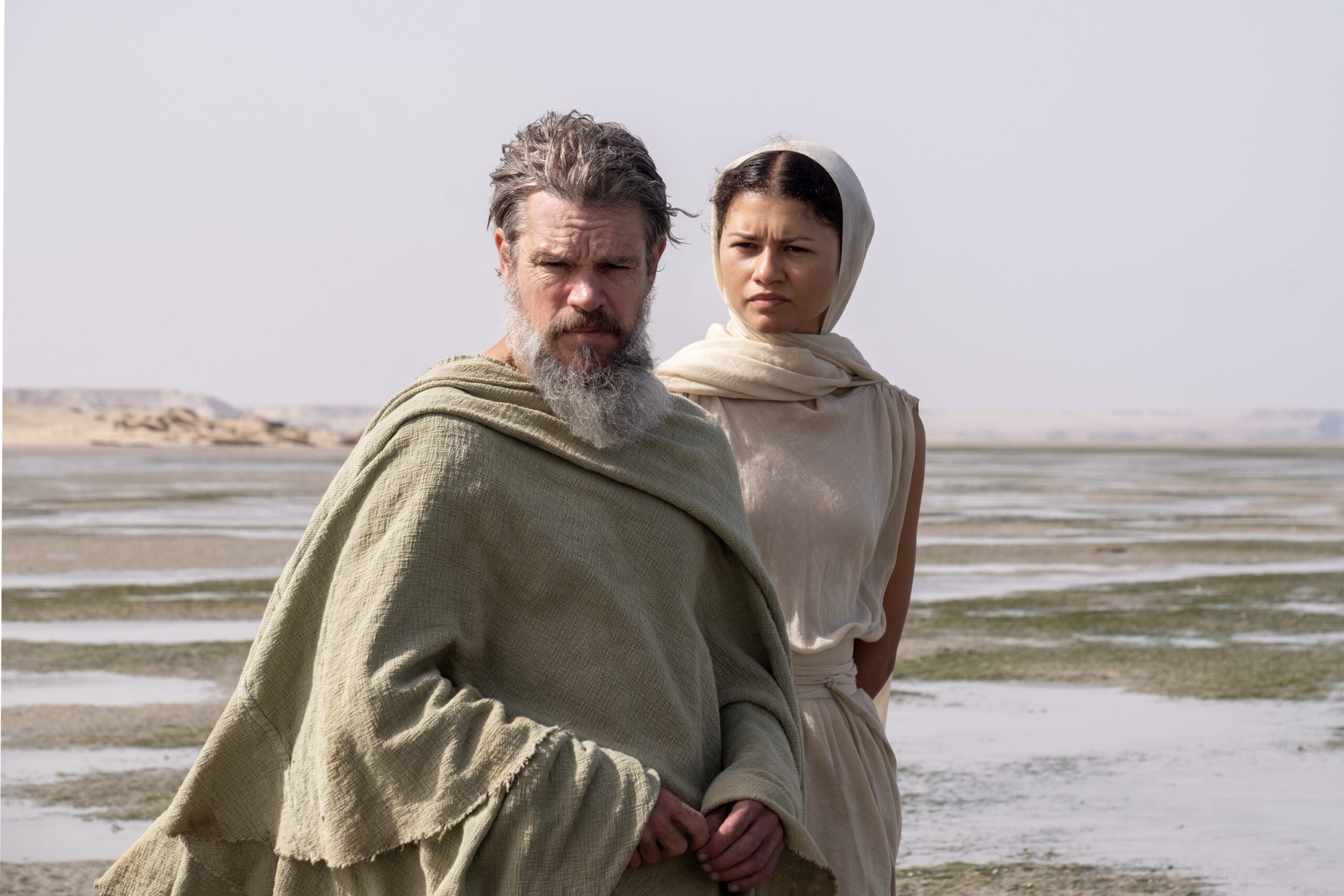
Matt Damon is Odysseus, and Zendaya plays Athena.
But perhaps the most laugh-out-loud moment comes when Odysseus’s troops arrive on an island, looking for provisions, only to encounter villagers who confuse them with the feared “sea people.” “We’re Greeks, from Ithaca,” a soldier comforts them. But the actor speaking the line is a person of color not even remotely resembling a Greek. (Yes, this part of the world was somewhat multi-racial, even 3,000 years ago, much more so than Hollywood showed us in their 20th-century films. But some of these choices simply don’t pass the smell test.)
Often labeled “colorblind casting,” this approach can work with modern storytelling. And its goal of equality of opportunity is noble. But with period pieces such as The Odyssey, it’s downright ridiculous and borderline racist. It’s Greek to me. (Sadly, these decisions are often financial ones, as film funding and award eligibility are sometimes tied to diversity.)
Another casting choice making news is that of Elliot Page, a transgender man formerly known as Ellen Page, as Sinon, a Greek soldier entrusted with offering the Trojan Horse to the people of Troy. Page, a capable performer, is a slightly odd pick for a warrior considering the actor’s slight build. Adding more strangeness is the fact that Sinon is featured so prominently despite not being a character in either The Iliad or The Odyssey. Instead, he is introduced in The Aeneid, by Virgil. Still, the character adds dramatic appeal, and Page does a fine job. If I hadn’t known about Page and hadn’t researched the character, I would have simply enjoyed the performance. So the culture-war complaints in this regard are unnecessarily distracting. Try to disregard the noise.
By the way, Nolan’s script takes other liberties with the original epic poem, which presumably took liberties with the events themselves, which were 500 years old by the time Homer came along. Most of the events are actually fictional, though most historians agree Troy existed (in what is today Turkey) and there really was a Trojan War. Most of Nolan’s liberties are forgivable because his screenplay, like Homer’s poem, stays true to the spirit of the story. And most audience members won’t notice anyway, as, sadly, we’re more familiar with Homer Simpson.
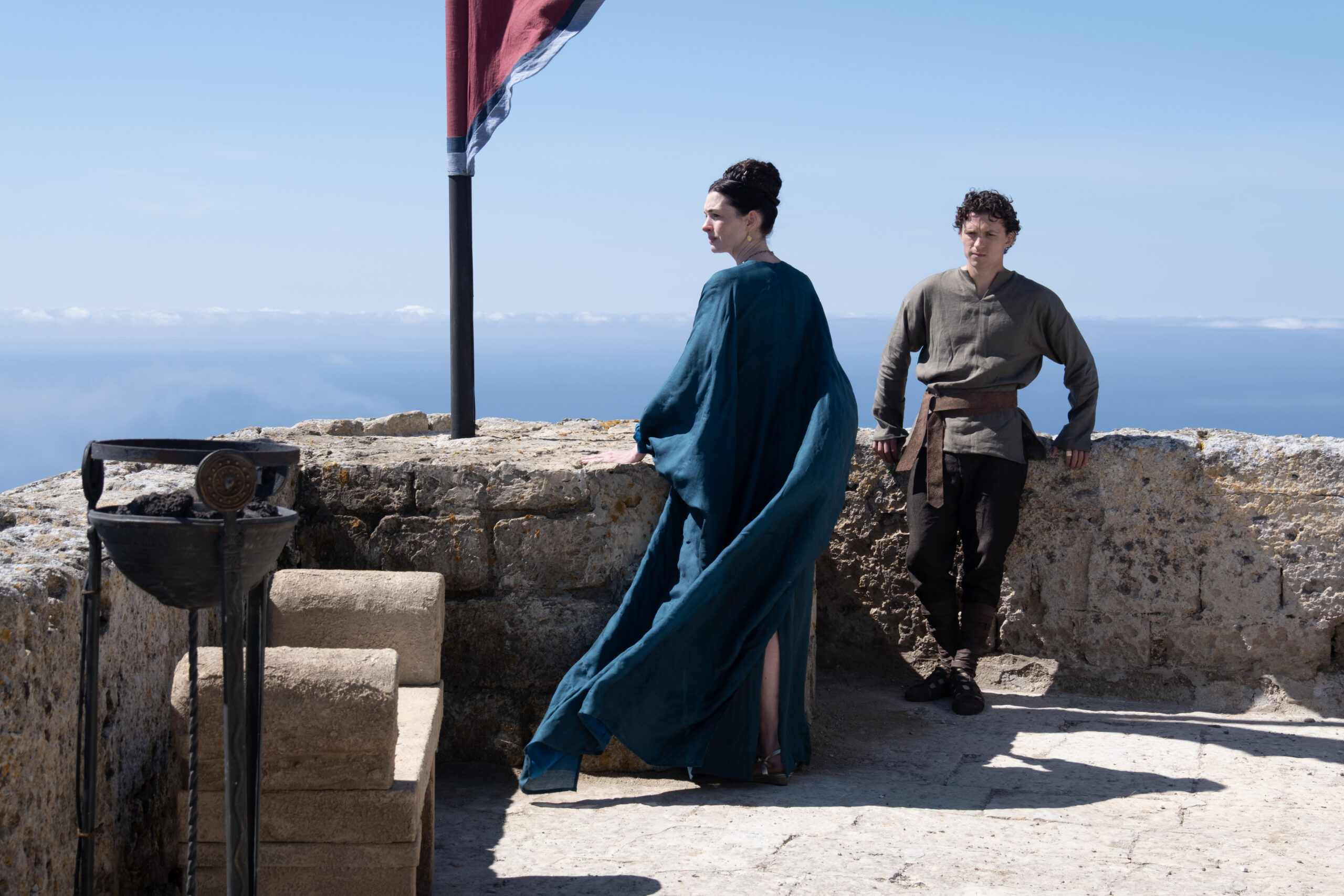
Anne Hathaway plays Penelope, and Tom Holland is Telemachus.
Another elephant in the temple is the film’s lack of joy and whimsy. Unlike previous sword-and-sandal epics, Nolan’s movie chooses drama over fantasy and horror over playfulness. In doing so, he has created the best horror film of the year and maybe the best drama. But anyone expecting this R-rated flick to show the lightheartedness of Ray Harryhausen will be disappointed.
Speaking of that, one cinephile friend of mine who hasn’t yet seen the film predicts it will become a Father’s Day tradition. But once he views the movie, I imagine he’ll agree with me that the only way that would happen is if the screening involved a father-son suicide pact.
Before this article becomes the most negative 4 ½-star review ever, let me praise Matt Damon (Odysseus) and Anne Hathaway (his wife, Penelope), who are both deserving of Oscar nominations, for lead and supporting, respectively. This is among the finest work they have ever done, and I defy you to not be moved almost to tears as Damon’s Odysseus is mentally ravaged by the song of the Sirens.
Samantha Morton is wonderfully creepy as the witch Circe while Tom Holland (as Telemachus, the son of Odysseus and Penelope) and John Leguizamo (as Odysseus’s most faithful servant) both do what is required, and then some. Their performances grow on you slowly over the nearly three-hour run time, and I enjoyed them even more the second time, as I did Charlize Theron as Calypso, though she has little to do.
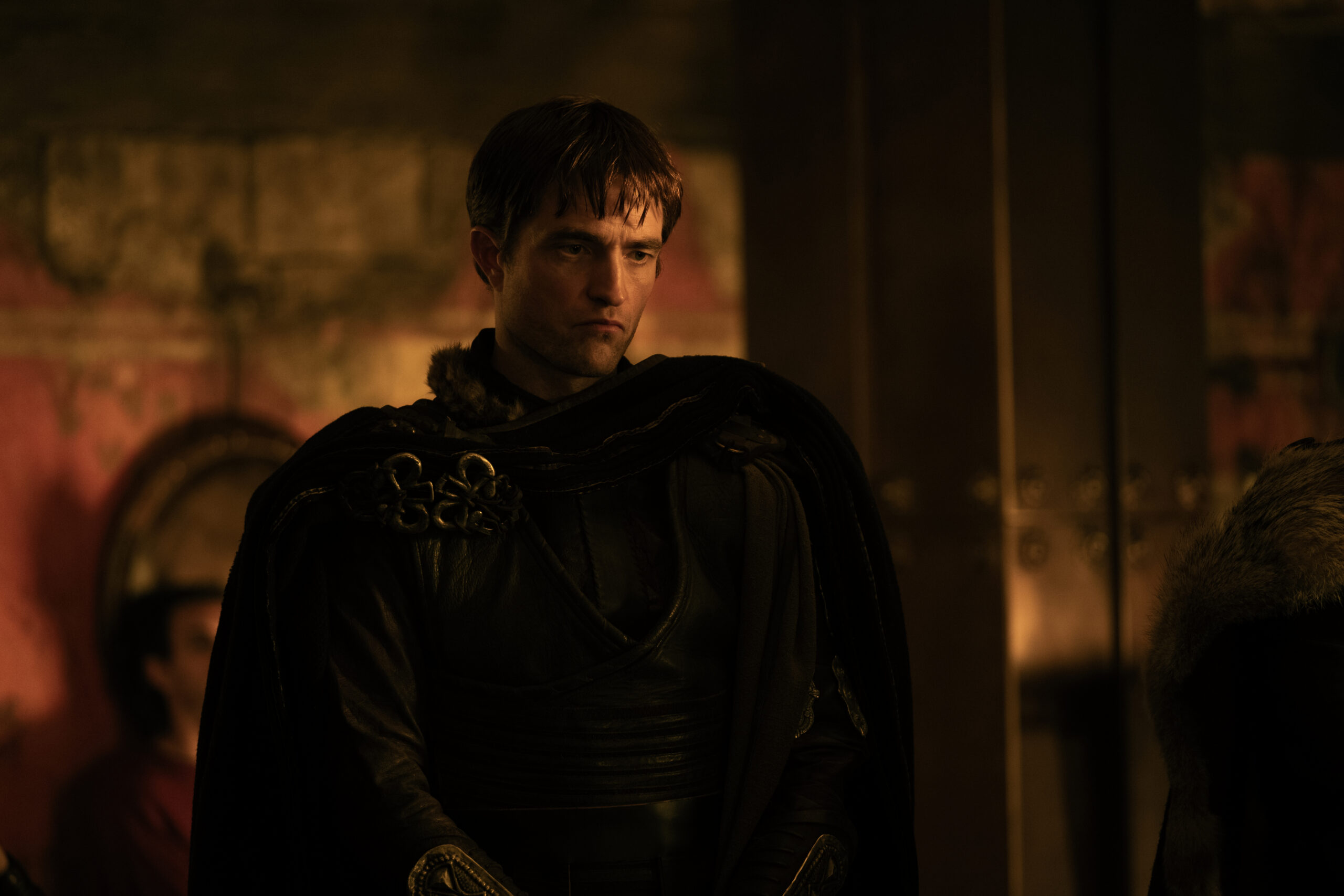
Robert Pattinson portrays Antinous.
However, I struggled somewhat with Robert Pattinson as Penelope’s chief suitor and Odysseus’s primary enemy, Antinous. As the film’s villain, he is sleaze personified, but the turn is heavy-handed, lacking the stature of Damon’s. And without balance between performances, the portions of the film set in Ithaca lack the power of the parts that focus on Odysseus’s journey home. They simply become less interesting.
Anthony Quinn played Antinous in the 1954 Italian version, Ulysses (the Roman name for Odysseus), and though the performance was not one of Quinn’s best, the Mexican-American actor could pass for Greek and brought a gravitas slightly missing with Pattinson.
Kirk Douglas played the title role in that film and had some memorable moments, as did the movie itself, particularly the Cyclops scene, which featured a real actor and some nifty forced perspective, plus an emotional meeting between Ulysses and the ghosts of his dead soldiers. Nolan’s version of that scene is more visually striking – as is his entire movie – but director Mario Camerini’s version includes the heartbreaking admission from the ghosts that they didn’t necessarily die in pain but instead are in constant pain now, in the underworld, thanks to Ulysses’ mistakes.
The fatal flaw of that version was the ridiculous European tradition of having actors among the international cast speak their own language on set. In post, the dialogue was dubbed into the language of whatever country the film was playing. So American audiences heard the real Douglas and Quinn but English-language dubbing for almost everyone else. Conversely, Italian audiences heard most of the original voices but Italian substitutes for Douglas and Quinn. No one saw a good version, but it was easier to market.
Other versions of the story exist on film, primarily a 1968 European television miniseries and a few mediocre stabs at the story, pun intended. There are other interpretations, of course, such as O Brother, Where Art Though? (Being an animal lover, I might prefer a gopher village to a castle.) But Nolan’s is the greatest by far.
IMAX or 70mm?
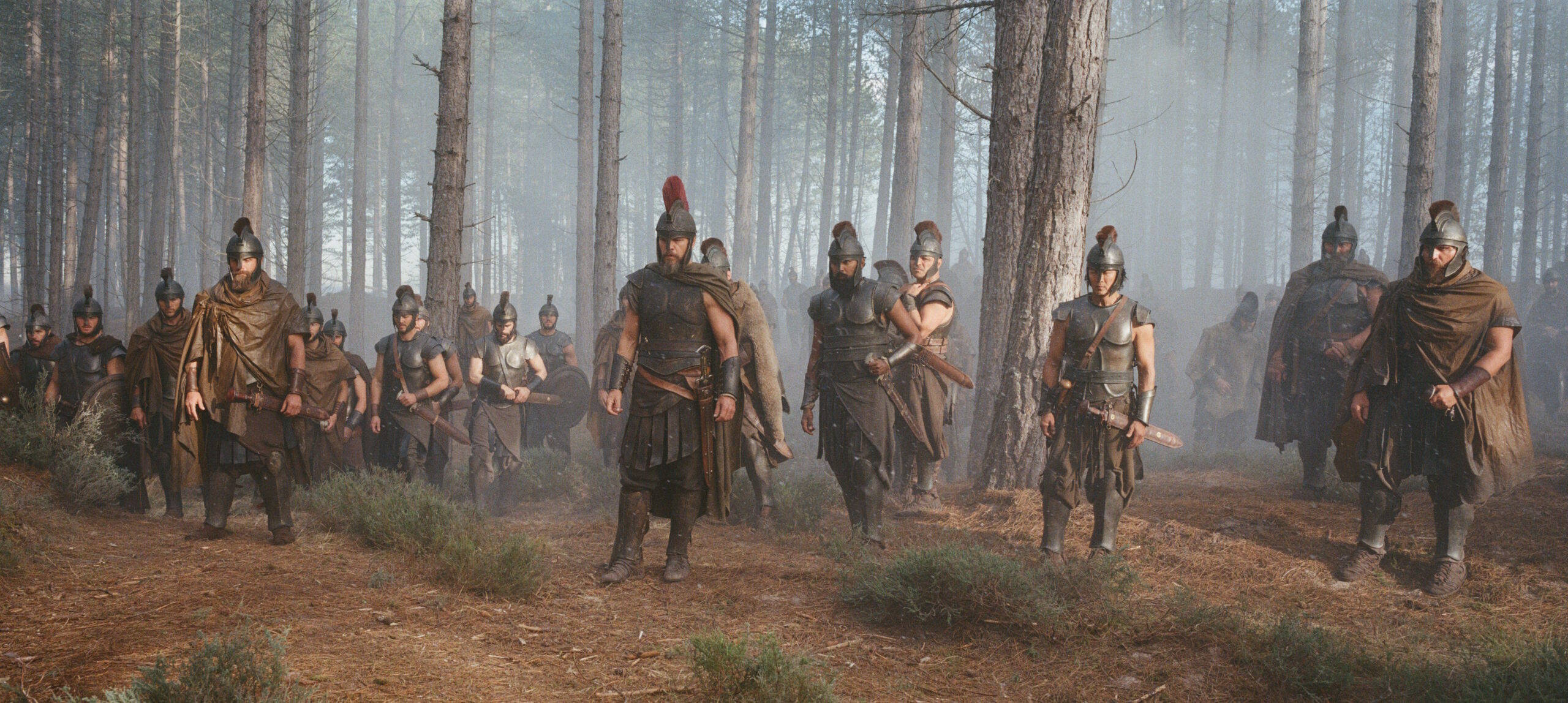
This image is formatted in the wider aspect ratio of 70mm, 35mm and digital projections. It might seem as if you get more picture, but the native IMAX image contains more visual information at the top and the bottom. All other images on this page are IMAX images in the original 1.43:1 ratio.
Despite the criticisms, The Odyssey is a grand spectacle and one of the two best films of 2026 so far, along with Steven Spielberg’s Disclosure Day. (The Odyssey is a greater technical achievement, but my heart still rests with Spielberg. Nolan certainly wins the battle over animals, though. Real always beats bad CGI.)
The real question then is HOW to see The Odyssey. Cinephiles are flocking to 70mm, and, when projected properly, that might be the best format. The lighting and color are wonderful, especially the blues of the sea, which are the prettiest I’ve seen since a 70mm screening of Nolan’s Dunkirk. However, the two 70mm screenings I attended were both technically flawed, the first containing odd pulsating (perhaps a bulb issue) and the second going badly out of focus because of a problem with the pressure plate in the film gate. This reminds us of the sublime and organic, but also troublesome, nature of traditional film.
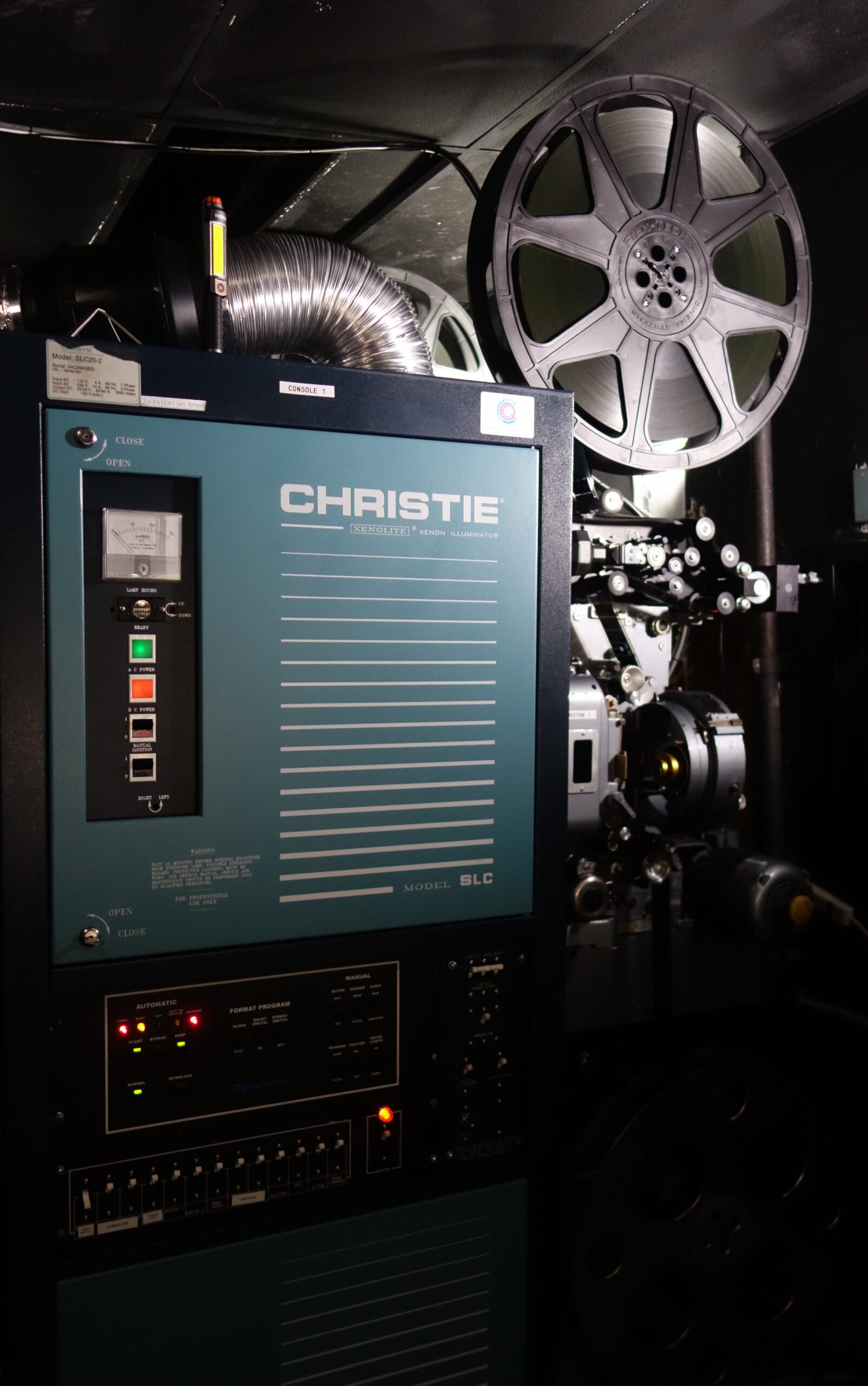
The Enzian Theater, one of Florida’s leading arthouse cinemas, is screening the film on its new 70mm projector.
Despite the beauty of 70mm, that format features a 2.20:1 aspect ratio. The Odyssey was shot with 65mm IMAX cameras and is the first feature-length, narrative-fiction movie to use that format for its entirety. But that format has a ratio of 1.43:1, meaning non-IMAX 70mm prints chop the top and bottom off the image to get its wider ratio. Keeping that in mind when watching the 70mm screenings, I became aware that I was missing important visual information. The frame needed more space to breathe. Therefore, I would recommend IMAX over 70mm. You might sacrifice some color, but you’ll get the entire image. Of course, IMAX 70mm is the perfect format, but only about 25 cinemas in the United States project it. At the very least, avoid standard digital projection, which has a ratio of 2.39:1, sacrificing the most quality and image.
Regardless of your choice, you’re in for a true event. Thanks to eye-popping imagery and impactful storytelling, Nolan and his Odyssey have proved Thomas Wolfe wrong: You can go Home(r) again.
Further, the film shows that the themes of humankind haven’t changed much in 3,000 years. Today, as it was then, our world is about love, family, loyalty, the desire for home — and war, which unceasingly makes a mockery of everything else.
© 2026 MeierMovies, LLC
The film is currently in cinemas. For more information, visit IMDB and Wikipedia. And if you liked this review, please follow MeierMovies on Facebook, Twitter, Instagram and YouTube.
Correction: The original version of this story implied that the Trojan Horse first appeared in Homer’s Iliad. It did not. It first appeared in The Odyssey.
For a ranking of all Nolan’s films, go here.