Tips and thoughts
A review of the ’26 SCAD Savannah FF
 Exclusive to MeierMovies, November 6, 2026
The Bible claims God created the world in six days. Because movies are more important than religion, it’s fitting that it took the SCAD Savannah Film Festival eight days to create its film world last month. Praise cinema!
The festival ran October 24-31 in Savannah, Georgia, and featured 72 features, 85 shorts, TV showcases and discussion panels. For reviews of many of the best films that played the 29th annual event, see my Jacksonville Folio Weekly article. This article is meant to complement that one by providing tips to those of you planning to go next year while also mentioning things organizers did right and wrong.
Tip #1: Buy a pass early. As the three types of passes often sell out more than a month in advance, don’t wait! Passes are much more expensive than individual tickets ($10-$15), of course, but it’s worth it if you want to fest in style. Opting for individual tickets means you will have to wait longer in line at the event, if you get in at all. It also means, if you want to get your tickets when they go on sale in early October (which you should), you will be forced to wait in an online queue.
And pick the pass that’s right for you. If you want to save money and see films just in the mornings and afternoons, the Daytime Pass ($200 in 2026) is your best choice, as it grants access to all films and panels prior to 6 p.m. If you want a bit more, pick the Spotlight Pass ($350), which provides everything the Daytime Pass does, plus admission to the opening-night and closing-night films and the Director’s Choice screening. For access to everything, go with the Marquee Pass ($600 in 2026). But keep in mind that holders of the Marquee Pass aren’t allowed in before holders of the other two passes. (All passholders stand in the same line and enter in the order they lined up.)
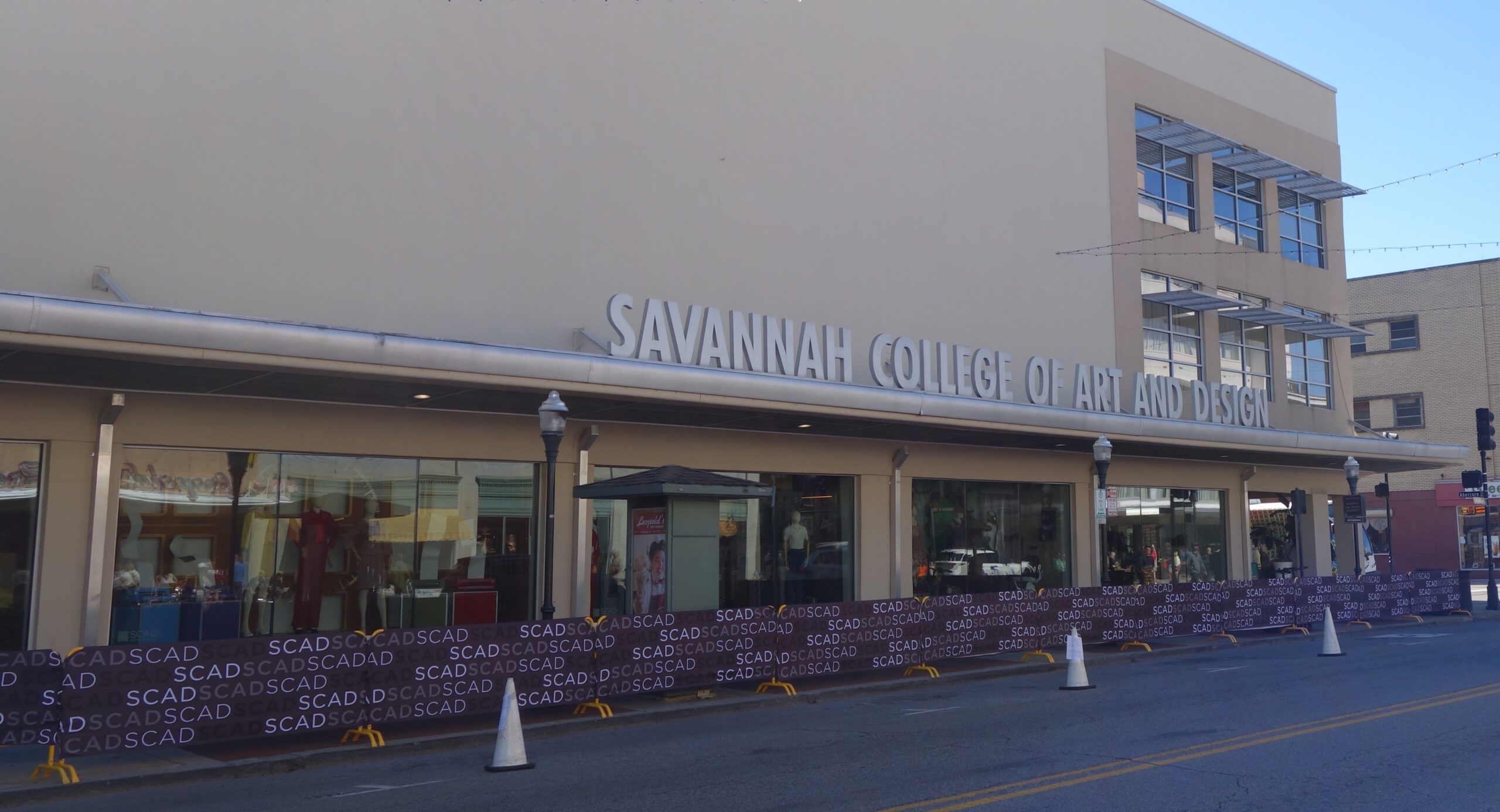 Tip #2: Line up early but don’t panic if you can’t. As you will soon discover when you arrive, many of the 75,000+ attendees queue more than an hour before a film. This is another reason a pass is preferable, as passholders have a separate line, which is let in prior to the ticketholder line. But even the passholder lines are long. So if you want that perfect seat, arrive well in advance.
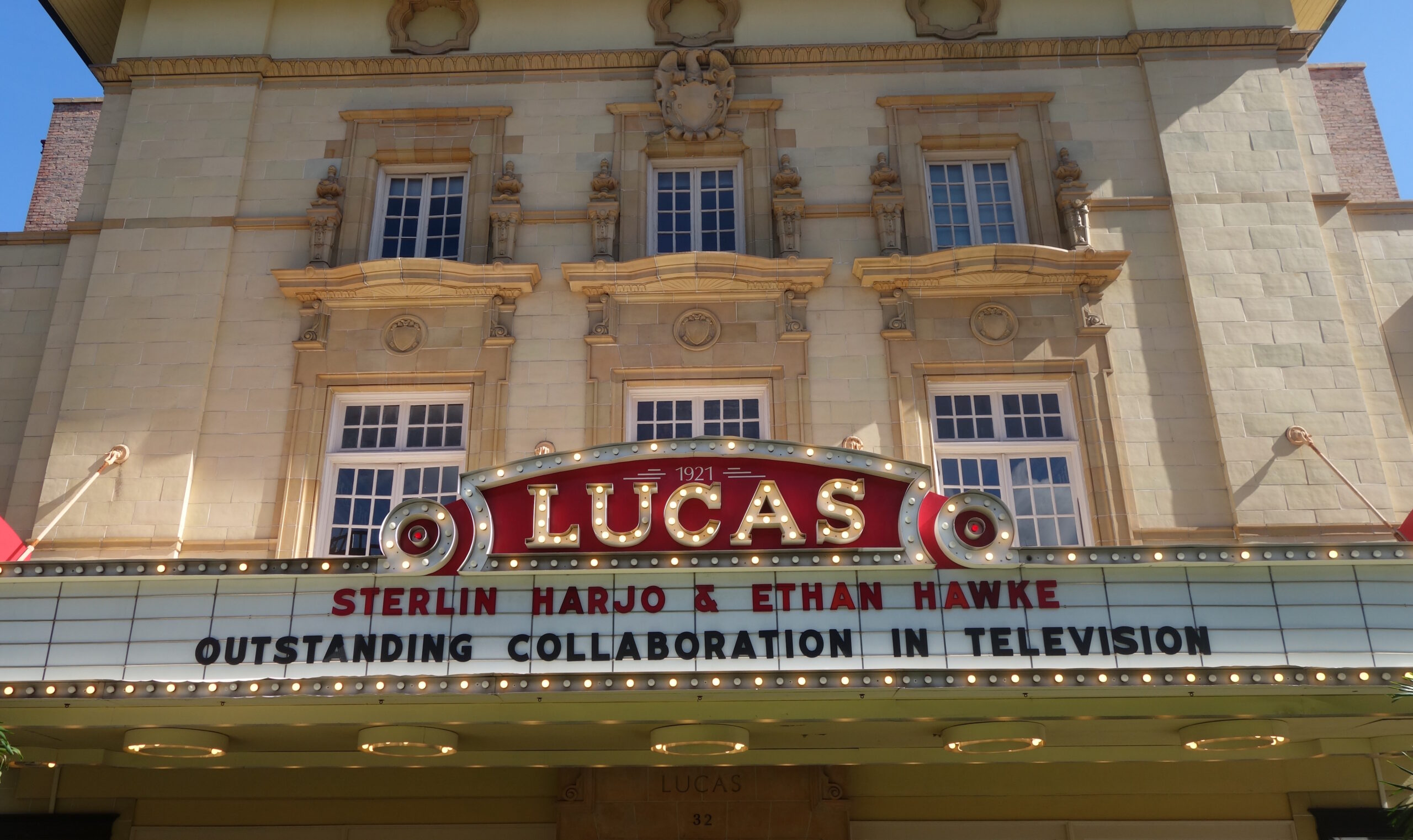
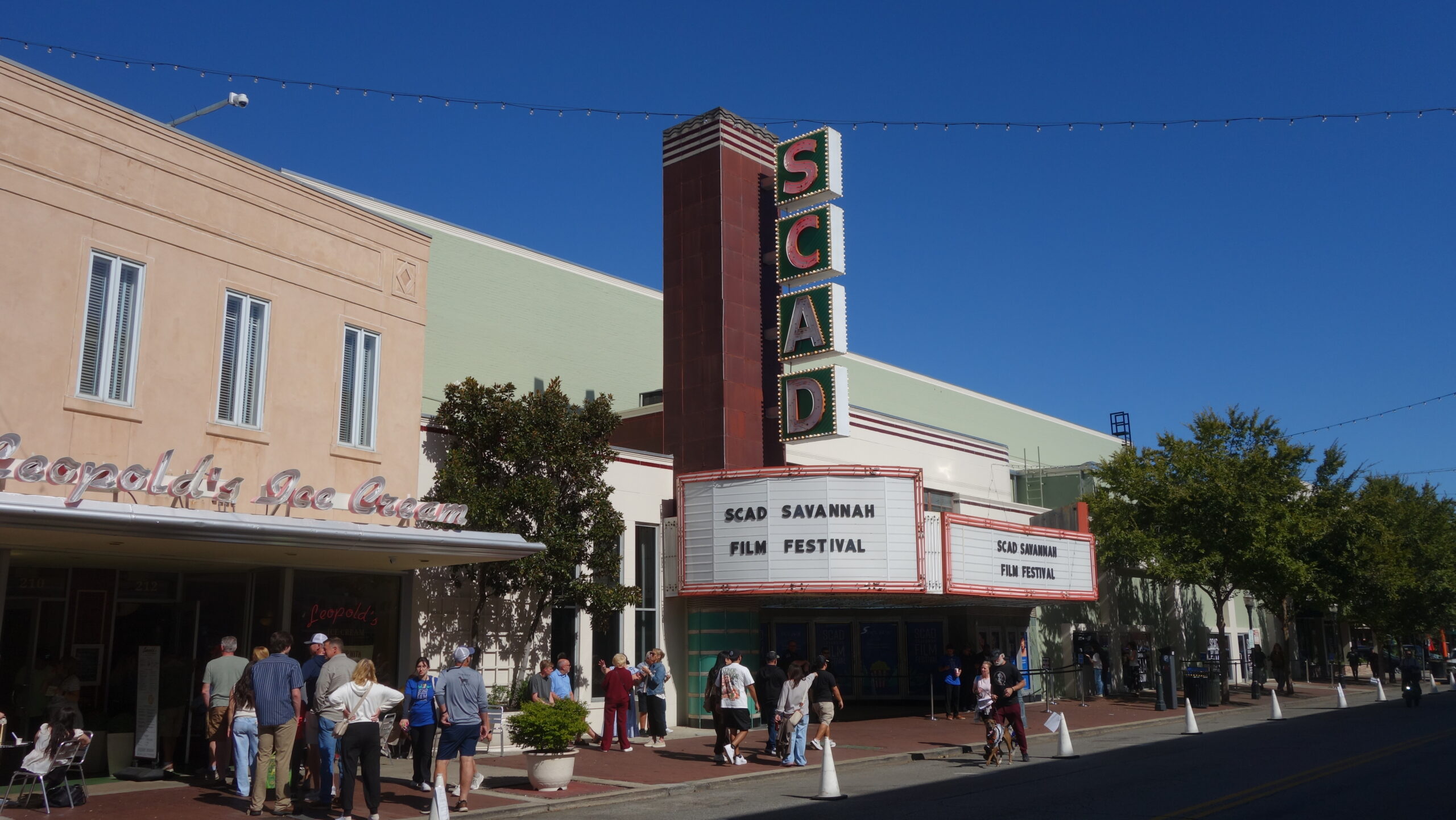
Thankfully, there is no need to freak out if you can’t get to the theatre ridiculously early. The two main venues, the historic Lucas and Trustees theatres, hold roughly 1,200 and 1,100, respectively, so all passholders and ticketholders will get in, provided you don’t stroll up at the last minute. I continually heard rumors that the festival reserves the right to turn passholders and ticketholders away if a screening reaches capacity. But I saw no evidence of this supposed overselling and even noticed that many people in the standby line got in as the movies were starting. Still, I would never recommend arriving at the theatre less than 10 minutes in advance.
The auditorium at the SCAD Museum of Art is much smaller, but its lines are shorter, and most of the seats are good. The Gutstein Gallery, across the street from the Trustees Theatre, is also small, but all its seats are good too. (That venue is used only for discussions.)
 Tip #3: Wait for the balcony. The festival has a frustrating policy of keeping the balconies at the Lucas and Trustees theaters closed until most of the floor seats are full. So instead of being bullied into picking a bad seat downstairs, it might behoove you to hang out in the lobby until the balcony is opened. You might just end up with a much better seat than people who were in line ahead of you. (The Lucas balcony is better than the Trustees balcony, as the former is situated closer to the screen.)
I repeatedly asked festival staff why they adhere to this ridiculous policy, as it forces people into seats they don’t want and rewards people who were farther back in line by giving them better balcony seats. They seemed reluctant to discuss the issue, mentioning security issues and the fact that filmmakers prefer to see a full downstairs rather than people scattered around both the floor and balcony. But that makes no sense because almost every screening I attended was sold out or close to capacity. I suspect they stick to this system because it’s easier to estimate the number of guests who have already entered, which is crucial if they are going to let in standbys. This is the one aspect of the fest that needs to change immediately. (Festival management did not return my e-mail requests for an interview.)
Tip #4: Watch your sightlines. Though the two main theaters, particularly the Lucas, are beautiful, sightlines aren’t great. So take that into account when picking a seat, and pray a tall person doesn’t sit in front of you. It’s a shame the screens can’t be raised slightly to help fix this problem, though that might mean moving speakers to stop them from blocking the top of the screens.
Tip #5: To prevent a sore back and butt, bring a small cushion. The seats in the historic venues are traditional ones, not the insanely posh ones most modern audiences are used to. And after multiple movies, body parts ache. (This is probably not a problem for most attendees, as the crowd is noticeably young when compared with other fests. This is a university-run event, after all, and most film students get the week off classes.)
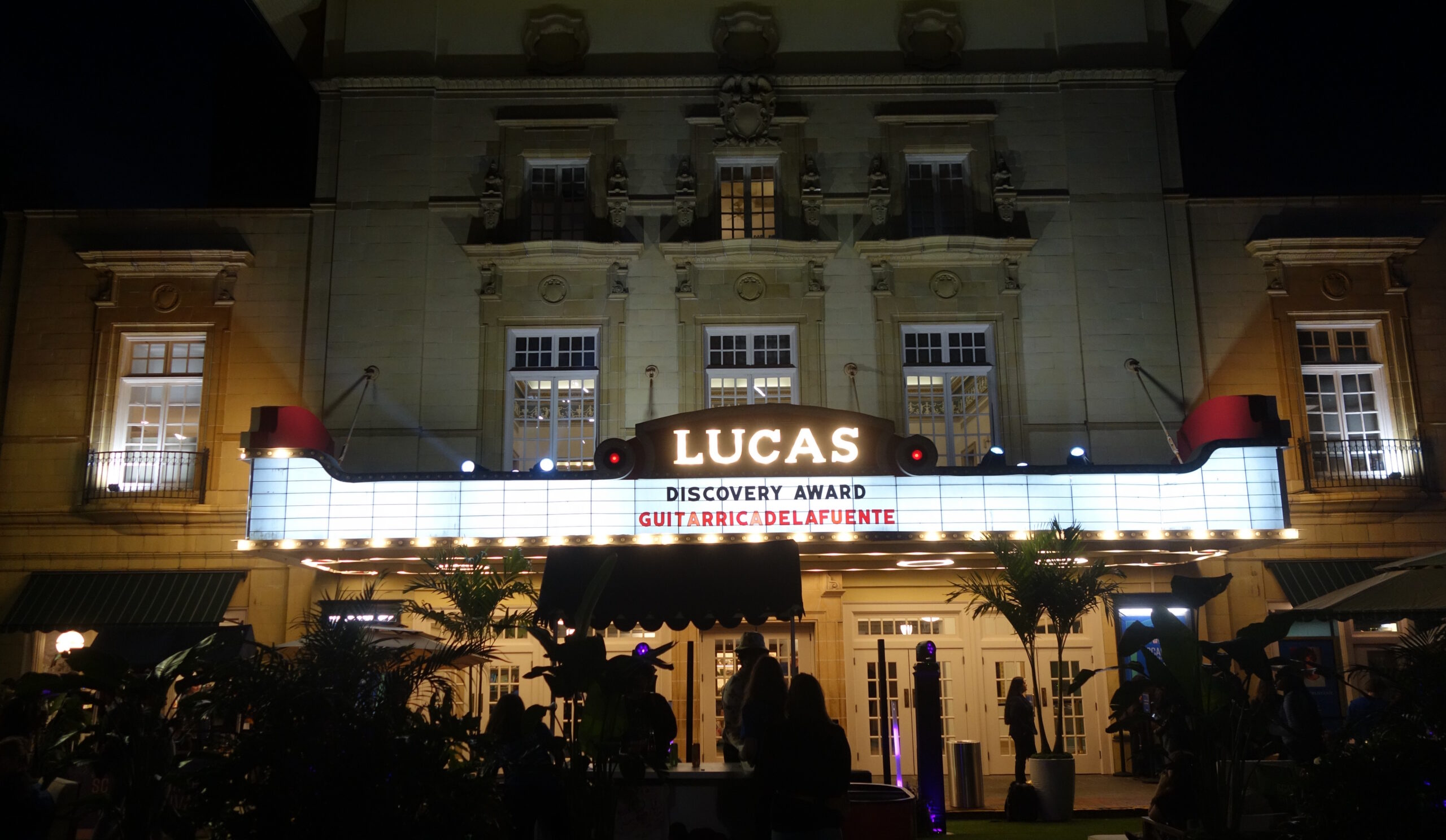 Tip #6: Stay for the discussions. The post-film talks are enlightening, and almost all interviewees are famous, semi-famous or have worked on a film with a legendary director. Take this year’s Odyssey panel: No, Christopher Nolan wasn’t there, but production designer Ruth De Jong, costume designer Ellen Mirojnick and casting director John Papsidera were, and they had tons of juicy Nolan stories.
My favorite comment of the entire event came from director James Gray (Paper Tiger), who reiterated something I have observed at countless Q&A sessions over the years: “The filmmakers who talked the most always made the worst movie.”
Tip #7: All films play just once, so plan carefully. The website can help, but the full-color, well-designed, collector programs are even better – and they are free! Volunteers and box-office staff are also prevalent and eager to answer questions.
With just eight days and three screening venues, there’s neither time nor space to show movies twice. In talking with attendees, I discovered there’s a consensus that SCAD should expand the festival to 10 days and try to add another venue, such as the Savannah Theatre, which sits in nearby, beautiful Chippewa Square, where Forrest Gump told his tale. But, unlike the existing locations, SCAD neither owns nor runs that cinema, so renting it would boost costs.
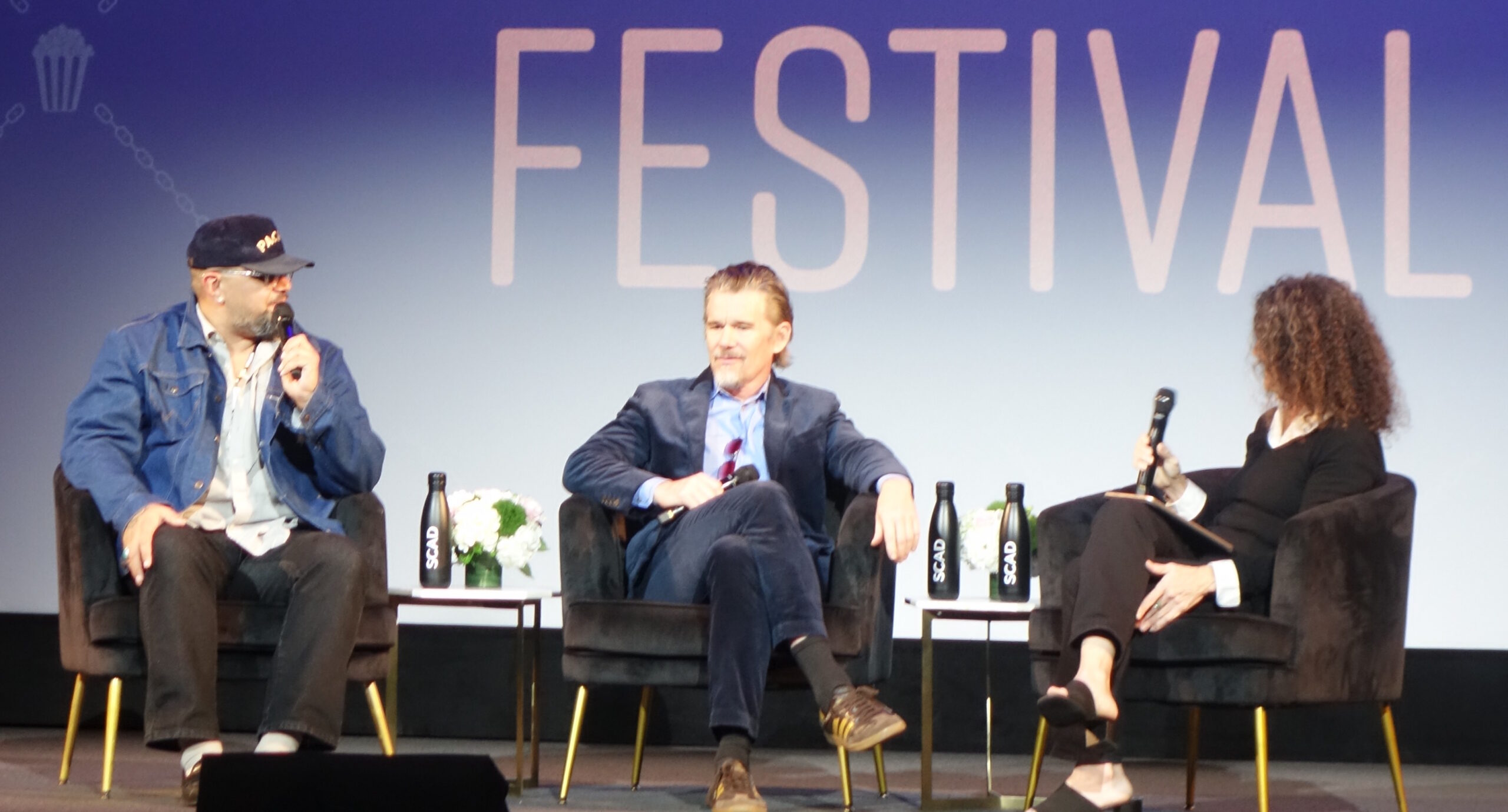
Sterlin Harjo, left, and Ethan Hawke discuss their FX show The Lowdown. (All photos are by Cameron Meier.)
Tip #8: Bring your camera and autograph book. If you’re into celeb-watching, this is your fest, as directly across the street from the Trustees is a huge red carpet for pictures, interviews and rabid fandom. The fest places so much emphasis on celebrities, in fact, that beginning filmmakers can often get neglected. Indeed, only four narrative-fiction features and four doc features were up for awards this year, with the rest of the films being more established productions screened out of competition.
This is a chief difference between this fest and, say, the Florida Film Festival, another one of the top fests in the Southeast. Savannah does screen many shorts from new and low-budget filmmakers, including students, but in regards to features, this is neither a buyer’s festival nor a great showcase for small, independent cinema.
 The silver lining to this format is almost all films are polished and professional, and you rarely see those rough-around-the-edges ones common at most smaller movie fests. Quality is superb. The fest also affords you the chance to catch up on some well-reviewed, wide-release films from earlier in the year, such as Backrooms, Project Hail Mary and the aforementioned The Odyssey, and hear from crew who worked on them.
Only one much older film was shown, however: The Matrix, with Keanu Reeves in attendance. Maybe next year the fest can screen a silent film, which would allow them to show off the Lucas Theatre’s organ.
Tip #9: Make time for food. Don’t be like this critic who forgot to allow for lunch and dinner between screenings. One hour is simply not enough. Sure, you can carry snacks, but if you’re attending the festival for the full eight days, take care of yourself physically. For a quick bite, I recommend Press Café across the street from the Trustees.

Bonaventure Cemetery
Tip #10: Enjoy Savannah. Don’t get so caught up in film that you forget to see the city itself, the oldest in Georgia, which is dripping with history. Allow yourself an extra day for a museum, a historic house tour, a half-day trip to Tybee Island or a walk around Bonaventure Cemetery. In addition, book your accommodation early, preferably within walking distance of the festival. (If you are staying outside central Savannah and driving in each day, I recommend the State Street Parking Garage, which is cheap and easy.)
After God created his world, he supposedly rested for a day. Other than writing this article, I’m still resting – exhausted and satiated by cinema.
© 2026 MeierMovies, LLC